

Best Metal Detectors for Beginners in 2026: 8 Expert Picks
Published by Dennis Wynne on 09/15/26
A veteran detectorist with more than 52 years in the hobby compares eight beginner-capable metal detectors currently sold by Kellyco, with picks from Nokta, Minelab, Fisher and XP.
Buying your first metal detector should be exciting, but in 2026 it can also be confusing. A new buyer has to sort through single-frequency machines, selectable-frequency detectors, simultaneous multi-frequency platforms, different waterproof ratings, Target ID systems, audio choices and enough settings to make a first hunt feel like a technical exam.
I started metal detecting in December 1973, long before Target ID screens, wireless headphones, and simultaneous multi-frequency detectors existed. My first detector was a Garrett Master Hunter BFO. My first memorable coin find which occurred after two weeks of metal detecting was a 1935 Buffalo nickel, and that early success started a hobby that has lasted more than 52 years.
Since then, I have hunted coins, jewelry and relics, searched old home sites, worked freshwater and saltwater locations, prospected for gold and used detector technology ranging from early BFO and VLF/TR machines to modern computerized and multi-frequency platforms. In 1977, a Garrett Groundhog found my first gold nugget while I was prospecting near Globe, Arizona.
That experience I have gained has taught me something that matters more than a specification sheet: the best metal detector for a beginner is not automatically the cheapest machine, and it is not the detector with the longest menu. It is the one that lets you learn the fundamentals, performs well where you actually intend to hunt and gives you enough capability that you do not immediately outgrow it.
Quick Answer: What Is the Best Metal Detector for a Beginner in 2026?
Best overall: Nokta DOUBLE SCORE 2. For most new metal detectorists, it offers the best balance of simultaneous multi-frequency operation, full waterproofing, useful ground-balance controls and room to grow at a midrange price.
Best value under $300: Minelab X-TERRA PRO. It gives a beginner selectable frequencies, full submersion, and a modern control platform at a price that competes with simpler machines.
Why You Can Trust This Guide
As I shared in the beginning of this article, I have been metal detecting since 1973. My recommendations are shaped by more than five decades of real-world experience with coin, jewelry, relic, freshwater, saltwater, and gold-prospecting environments. That experience helps me separate features that genuinely help a new detectorist from features that mostly add cost or complexity.
This is an expert buyer's guide, not a claim that I performed a laboratory head-to-head field test on every detector in this article. I will not pretend otherwise. For machines I have not personally field-tested, I evaluated current manufacturer and Kellyco specifications, frequency technology, waterproofing, ground handling, target information, weight, coil support, intended use, and current price relationships, then applied those facts to conditions I know from decades of detecting.
I also started with Kellyco's broader reputable hobby-detector lineup rather than choosing brands first. The eight machines below were selected because each fills a distinct beginner need. Good detectors were left out when another model covered the same job more convincingly at current 2026 pricing.
Another factor that is reflected in this article is the fact that I have mentored many people in the metal detecting hobby. I have consistently heard the concerns expressed by many new to the hobby, and I have helped them learn and overcome the issues they have presented to me.
Availability and current Kellyco lineup information were rechecked on August 29, 2026 using current Kellyco listings and direct Kellyco confirmation where available. Prices, promotions, packages and stock can change. In particular, the Nokta SIMPLEX ULTRA was removed from this guide after direct confirmation that Kellyco is no longer carrying it, even though older or indexed Kellyco product pages may still appear online.
How I Chose the Eight Best Beginner Metal Detectors
I gave the most weight to the factors that actually help a new detectorist succeed:
- Ease of operation and sensible factory search programs
- Useful audio and Target ID rather than information overload
- Target separation and recovery behavior in trash and iron
- Ground balance capability and handling of mineralized soil
- Weight and balance during a real hunt
- Waterproofing appropriate to the intended environment
- Saltwater capability when beach hunting is part of the plan
- Availability of useful search coils and accessories
- Room to grow as the operator gains experience
- Value relative to what the detector can actually do
I also considered price relationships. A detector can be a good machine and still be a weaker recommendation if another current model costs only a little more but offers a major advantage such as full waterproofing or simultaneous multi-frequency operation.
Best Metal Detectors for Beginners in 2026: At a Glance
These eight are not arranged as a simple deepest-to-shallowest ranking. Each earns its place for a different beginner need, budget or hunting environment.
|
Metal Detector |
Best For |
Technology |
Water Protection |
Kellyco Price* |
|
Best Overall |
Simultaneous multi-frequency |
Fully submersible |
About $349 |
|
|
Best Value Under $300 |
Selectable single-frequency VLF |
Fully submersible |
About $270 |
|
|
Best Budget Land Detector |
7.69 kHz VLF |
Weatherproof control; waterproof coil |
About $229 |
|
|
Best Simple Multi-Frequency Choice |
Simultaneous multi-frequency |
Fully submersible |
About $329 |
|
|
Best Lightweight Traditional Land Detector |
7.69 kHz VLF |
Weatherproof control; waterproof coil |
About $309 |
|
|
Best Beginner Multi-IQ Choice |
Multi-IQ simultaneous multi-frequency |
Fully submersible |
About $349 |
|
|
Best Premium Ultralight Choice |
FMF simultaneous multi-frequency |
IP68; deeper setup requires accessories |
About $569-$699 |
*Approximate Kellyco price when checked August 29, 2026. Sale pricing and packages can change.
1. Nokta DOUBLE SCORE 2
Best Overall Metal Detector for Most Beginners
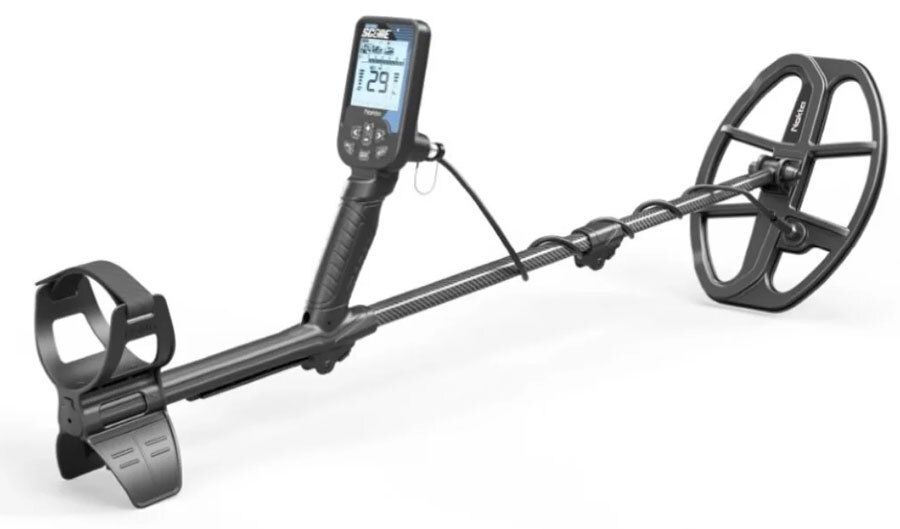
The DOUBLE SCORE 2 remains my best overall beginner recommendation. It gives a new detectorist simultaneous multi-frequency operation, Park, Field and Beach modes, full IP68 waterproofing to about 16 feet and enough ground control capability to remain useful as skills improve.
At the time of this update, Kellyco lists it around $349. That price matters because it puts true simultaneous multi-frequency performance and full submersion into the same range as several simpler detectors. The DOUBLE SCORE 2 also provides automatic, manual and tracking ground balance, which gives a learner more flexibility when moving from mild park soil to tougher ground.
Why It Makes the List
- Simultaneous multi-frequency operation
- Automatic, manual and tracking ground balance
- Park, Field and Beach modes
- Fully waterproof to about 16 feet
- Lightweight at roughly 2.7 pounds
- Simple enough to start with, but not easy to outgrow
Things to Consider
The DOUBLE SCORE 2 still offers more adjustment than the most basic starter machine. A complete beginner should start with the appropriate factory mode and resist the urge to change every setting during the first hunt.
Best For
Beginners who want one versatile detector for parks, old yards, fields, freshwater, beaches and general-purpose treasure hunting.
2. Minelab X-TERRA PRO
Best Value Under $300
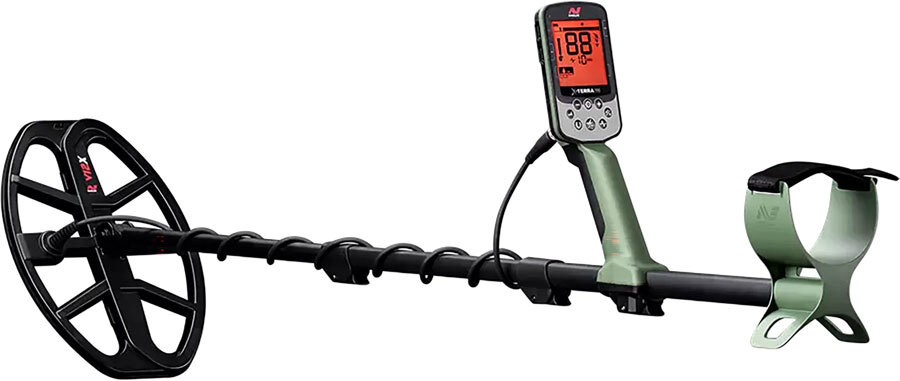
Minelab X-TERRA Pro - Purchase
The X-TERRA PRO is one of the strongest current values in Kellyco's beginner lineup. Kellyco lists it around $269.99, yet it is fully submersible to approximately 16 feet and gives the operator selectable frequencies of 5, 10, and 15 kHz in Park/Field modes and 8 kHz in Beach mode.
Selectable frequency is not the same as simultaneous multi-frequency. The detector runs one selected frequency at a time. For a learner, however, that can be educational. You can hear how frequency choice changes the way a detector responds while still using Park, Field and Beach search modes as a reliable starting point.
Why It Makes the List
- Selectable 5, 10 and 15 kHz in Park/Field; 8 kHz in Beach
- Fully waterproof to about 16 feet
- Park, Field and Beach programs
- About 2.9 pounds
- Wide -19 to 99 Target ID range
- Good coil and accessory support
- Exceptional capability for the current price
Things to Consider
If regular wet-salt surf hunting is going to be a major part of your detecting, I would move to a true simultaneous multi-frequency machine. The X-TERRA PRO can work beaches, but its selectable-frequency design is not Multi-IQ.
Best For
Budget-conscious beginners who want waterproofing, modern controls and frequency flexibility for inland coin, jewelry and relic hunting.
3. Fisher F22
Best Budget Traditional Land Detector
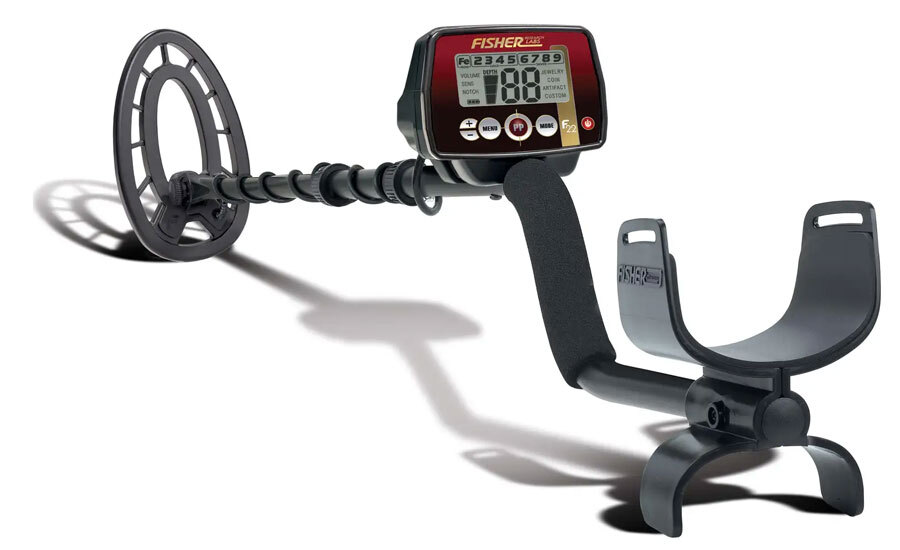
The Fisher F22 earns a place because a beginner article should not imply that only the newest technology can find treasure. Kellyco still sells the F22, and it remains a straightforward, lightweight way to learn ordinary coin, jewelry and relic hunting.
It runs at 7.69 kHz, weighs about 2.3 pounds and provides numeric Target ID, four search modes and a waterproof search coil. Its IP54 control housing is weather resistant rather than submersible. For someone who expects to hunt parks, yards, school grounds and old home sites, that may be a perfectly reasonable tradeoff for the price.
Why It Makes the List
- Low current purchase price
- Approximately 2.3 pounds
- Numeric Target ID and four search modes
- Waterproof search coil
- Long battery life from replaceable batteries
- Simple traditional VLF platform
Things to Consider
The F22 is single frequency, the control box cannot be submerged and its ground adjustment is more limited than the more advanced machines in this guide. Those limitations narrow its best uses, but they do not stop it from being a legitimate detector.
Best For
First-time land hunters who want a reputable detector at a modest price and do not need full water submersion or saltwater focused technology.
4. Nokta SCORE
Best Simple Simultaneous Multi-Frequency Detector
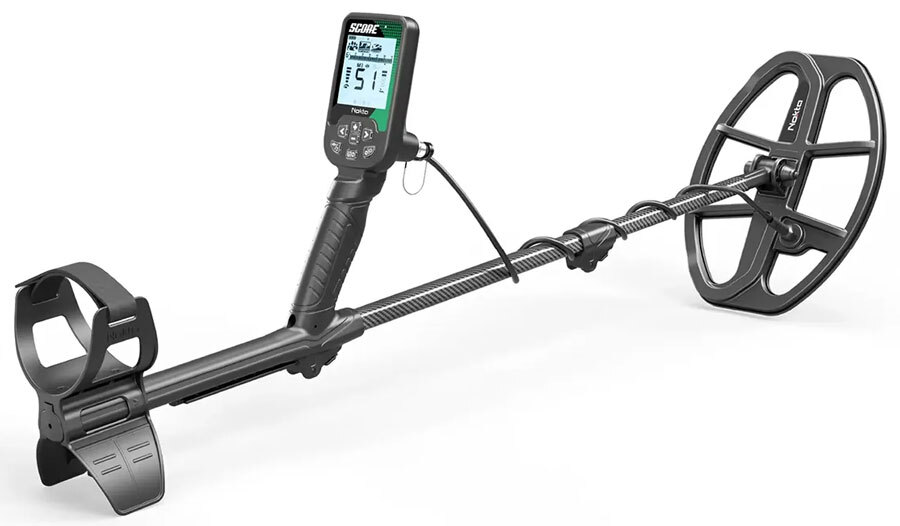
The Nokta SCORE gives a beginner simultaneous multi-frequency performance in a deliberately simplified platform.
Kellyco currently lists the SCORE at about $329 and identifies it for beginner, coin, relic and beach use. It is fully IP68 waterproof to about 16 feet, weighs about 2.7 pounds, offers Park, Field and Beach modes, rechargeable power, vibration, a backlit display and a simple control scheme designed around turn-on-and-go use.
Why It Makes the List
- Simultaneous multi-frequency operation
- Fully waterproof to about 16 feet
- Approximately 2.7 pounds
- Park, Field and Beach search modes
- Rechargeable battery and vibration alert
- Simple controls with little menu complexity
- Strong saltwater and all-purpose versatility for the price
Things to Consider
The SCORE intentionally omits some of the extra ground balance and sensitivity controls found on the DOUBLE SCORE 2. That is why the DOUBLE SCORE 2 remains my Best Overall choice. But for a first-time buyer who values simplicity and wants simultaneous multi-frequency without paying for controls he may not initially use, the SCORE makes excellent sense.
Best For
Beginners who want a simple, fully waterproof simultaneous multi-frequency detector for parks, fields, freshwater and beaches, especially buyers who would rather learn target behavior than spend their first hunts adjusting menus.
5. Fisher F44
Best Lightweight Traditional Land Detector
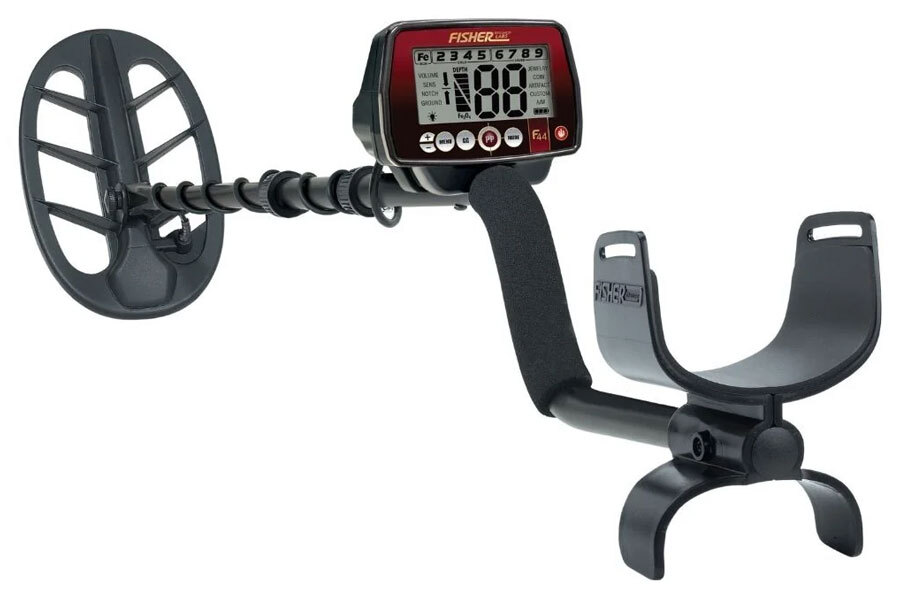
The Fisher F44 is not here because it has the newest feature list. It is here because many beginners spend most of their time on dry land, and the F44 is light, understandable and equipped with better ground control than many basic starter machines.
Kellyco currently lists the standard F44 around $309 and an 11-inch DD version around $329. The detector operates at 7.69 kHz, weighs about 2.3 pounds, offers five search modes, 99 Target IDs, Ground Grab plus manual ground-balance adjustment, adjustable iron audio and a backlit display.
Why It Makes the List
- Very low swing weight at about 2.3 pounds
- Five practical search modes
- Ground Grab plus manual ground balance
- 99-point numeric Target ID
- Adjustable iron audio
- Weather-resistant control housing
- Excellent learning platform for inland detecting
Things to Consider
At roughly $300, the F44 competes directly with newer waterproof machines. I would choose it when low weight, traditional controls and inland use are more important than full submersion or simultaneous multi-frequency operation.
Best For
Park, yard, field and old-site hunters who value light weight and straightforward controls and do not plan to spend much time in surf or deep water.
6. Minelab VANQUISH 460
Best Beginner Minelab Multi-IQ Detector
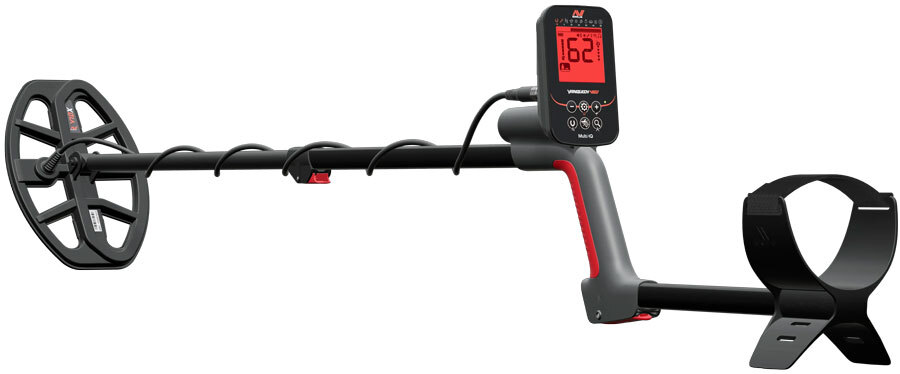
Minelab Vanquish 460 - Purchase
The VANQUISH 460 is one of the most important changes in the 2026 beginner market because it brings Minelab's Multi-IQ simultaneous multi-frequency system into a lightweight, fully submersible detector aimed directly at users who do not want an advanced flagship learning curve.
Kellyco currently lists the 460 around $349. It weighs about 2.8 pounds, is waterproof to roughly 16 feet, uses a rechargeable battery and provides a broad -19 to 99 Target ID scale. For a beginner who is not yet sure whether he will prefer parks, relic sites or beaches, that versatility is valuable.
Why It Makes the List
- Multi-IQ simultaneous multi-frequency
- Fully waterproof to about 16 feet
- Approximately 2.8 pounds
- Broad Target ID range
- Rechargeable battery
- Good coin, jewelry, relic and beach versatility
- A platform a beginner can keep using as experience grows
Things to Consider
Do not let Target ID become a fixation in your mind. Target ID will vary between metal detectors, between sites, and sometimes even from one target to the next because that target ID is based on conductivity, depth, target angle, corrosion, soil and nearby iron which can all change the displayed number. Even with modern Multi-IQ, a beginner still needs to listen to the signal and check questionable targets from more than one direction.
Best For
Beginners who want Minelab Multi-IQ, full waterproofing and strong all-around performance without moving into Equinox or Manticore pricing.
7. XP ICON
Best Premium Ultralight Beginner Detector
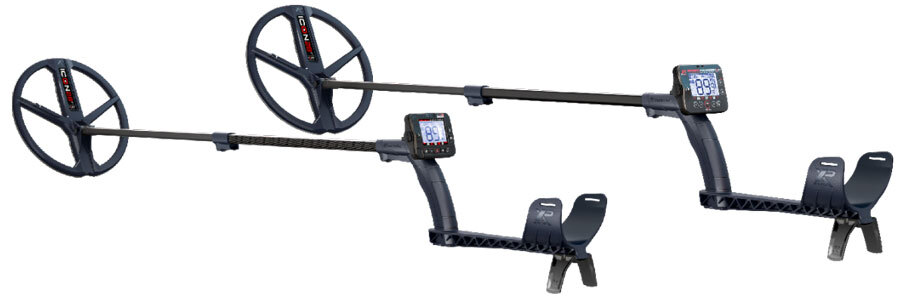
The XP ICON earns the premium slot because its combination of very low swing weight and simultaneous multi-frequency performance is genuinely different from the other detectors in this guide. Kellyco currently lists the 11-inch ICON from about $569 depending on package, and labels it suitable for beginners as well as advanced users.
The ICON uses XP FMF simultaneous multi-frequency technology, includes three factory programs plus three user programs, offers adjustable Reactivity and ground handling, and weighs only about 845 grams fully equipped - roughly 1.9 pounds. That difference can become very noticeable after several hours of detecting.
Why It Makes the List
- XP FMF simultaneous multi-frequency technology
- Extremely low swing weight
- Three factory plus three user program slots
- Adjustable Reactivity for target separation
- Grab and tracking ground balance
- Wide XP coil and wireless accessory ecosystem
- IP68 remote with underwater options
- Long-term platform with software updates
Things to Consider
The ICON costs much more than the best value machines, and XP's wireless architecture is different from a conventional detector layout. Its remote is IP68, but deeper underwater use requires the proper XP headphones and waveguide configuration. It is not the machine I would tell every beginner to buy; it is the premium choice for someone who values light weight and wants XP technology from the start.
Best For
Beginners with a larger budget, hunters who place a premium on low swing weight, and buyers who want a modern XP platform they can continue using for years.
Why This List is Confined to Eight Metal Detectors
When I first started on this article, I was going to share my thoughts on 12 metal detectors. Then I realized that a longer list can look comprehensive while actually making the buying decision harder. I deliberately removed overlapping choices so that every detector in the final eight has a clear reason to be here. The Minelab X-TERRA ELITE, VANQUISH 560, Garrett AT Pro and XP ICON-X are legitimate machines, but they overlap roles already covered by these eight or move further into step-up pricing and complexity.
Leaving a detector out does not mean it is a poor machine. It means I would rather give a first-time buyer eight distinct choices than twelve variations of the same answer.
What Should a Beginner Look for in a Metal Detector?
- Ease of Use
Your first hunts should be spent learning targets and how they respond, not menus. Factory programs such as Park, Field, Beach, Jewelry or Coins give you a known starting point. Use them until you understand what the detector is telling you.
- Weight and Balance
A few ounces sounds unimportant while reading specifications at home. It becomes important after several hours of swinging. Balance matters too; a well-balanced machine can feel lighter than another detector with a similar scale weight.
- Target ID
Modern Target ID is useful, but beginners often trust it too much. The number is the detector's interpretation of a signal and can change with depth, soil, corrosion, target angle and nearby metal. Never let the screen completely replace your ears.
- Recovery Speed and Target Separation
Old home sites and gathering places can be full of nails, wire and generations of metal trash. A good coin only inches from iron may be masked. Recovery behavior and access to smaller coils can be extremely important in those sites.
- Waterproof Detector vs. Waterproof Coil
Read this specification carefully. A waterproof coil does not mean the entire detector can be submerged. The Fisher F22 and F44 have waterproof coils but weather-resistant control boxes, while the Nokta DOUBLE SCORE 2, Nokta SCORE, Minelab X-TERRA PRO and VANQUISH 460 can be submerged to their stated limits.
- Single Frequency vs. Selectable vs. Simultaneous Multi-Frequency
Single-frequency detectors have recovered enormous amounts of treasure and remain effective. Selectable-frequency machines let you choose one frequency at a time. Simultaneous multi-frequency platforms process multiple frequencies as part of the detection system and are particularly attractive for beginners who want one detector for varied ground and wet saltwater beaches.
- Ground Balance
Ground balance helps a detector compensate for mineralization. I have hunted and prospected in very different ground conditions around the United States, and soil can dramatically change how a machine behaves. Automatic handling helps beginners, while manual and tracking options become more useful as experience grows.
- Search Coil Size
There is no single coil that is best for every site. Smaller coils can be excellent in iron, trash, brush and tight places. Larger coils cover more ground and may offer depth advantages on some targets. I am a strong advocate of small coils in iron-filled sites because having fewer targets under the coil at one time can make both learning and target separation easier.
Which Beginner Metal Detector Should You Buy?
Start with one question: where are you actually going to use it? If you are mainly hunting parks, yards and fields, every detector in this guide can work. If you are going into lakes or rivers, prioritize full waterproofing. If you expect to hunt wet saltwater sand and surf regularly, simultaneous multi-frequency and a salt-capable beach mode move much higher on the list.
If you are researching old home sites filled with nails, target separation and access to smaller coils become increasingly important. If you do not yet know what kind of detecting you will enjoy, choose versatility rather than a machine built around a narrow specialty.
For most beginners in 2026, that brings me back to the Nokta DOUBLE SCORE 2. For the strongest value under $300, I would choose the Minelab X-TERRA PRO. For a low-cost traditional land detector, the Fisher F22 is still legitimate.
Frequently Asked Questions About Beginner Metal Detectors
What is the best metal detector for a complete beginner in 2026?
For most people starting from scratch, my overall choice is the Nokta DOUBLE SCORE 2 because it combines simultaneous multi-frequency operation, full waterproofing and useful ground handling without forcing the buyer into flagship pricing.
What is the best beginner metal detector under $300?
The Minelab X-TERRA PRO is my strongest current sub-$300 value pick. Kellyco lists it around $269.99, and it gives the buyer full submersion, selectable operating frequencies and a modern control system.
What is the best beginner metal detector for saltwater beaches?
For regular wet saltwater sand and surf, I favor a true simultaneous multi-frequency machine with a salt-capable beach mode. The Nokta DOUBLE SCORE 2, Minelab X-Terra Pro, Nokta SCORE, VANQUISH 460, and XP ICON are the strongest candidates in this eight-model guide, depending on budget and preferred controls.
Are Fisher single-frequency detectors still worth buying?
Yes. The F22 and F44 are still legitimate inland coin and relic detectors. Their limitations are also real: they are not fully submersible and do not offer simultaneous multi-frequency operation. Newer technology expands versatility; it does not erase the value of a proven VLF in the conditions it was designed for.
Should a beginner buy an expensive metal detector?
Usually not. A more expensive detector can add better target information, recovery controls, ground handling, wireless features or multi-frequency capability, but it cannot replace site research, permission, coil control or the time required to learn target audio. Buy enough detector for the places you realistically intend to hunt, then learn it well.
Final Advice
Do not become so concerned with choosing the perfect metal detector that you never get started. I began in 1973 with equipment that would look primitive beside even today's affordable machines, yet those early detectors taught me the fundamentals that still matter more than 50 years later.
The single most important thing an experienced veteran like myself can share with you it that you should learn the machine in your hands. Every single snap, crackle, and pop any metal detector makes is that machine’s capabilities trying to tell you what the target most likely is. Learning the nuances of any new to you metal detector is the number one goal you should have.
Research good places to hunt. Obtain permission when required. Keep the coil close to the ground and level. Dig enough questionable targets to understand what your detector is telling you. Rotate around difficult signals. Pay attention to the site instead of staring constantly at the screen.
Detector technology has changed enormously since I found my first targets. One thing has not changed at all: you still have to put the coil over the target.
About the Author
Dennis Wynne has been metal detecting since 1973 and has more than 52 years of experience searching for coins, jewelry, relics, and gold. His detecting and prospecting experience includes land, freshwater, saltwater, and gold-prospecting environments in several western states and Alaska. He began with early Garrett BFO technology, found his first gold nugget with a Garrett Groundhog in 1977, and has continued through successive generations of VLF, computerized, and modern multi-frequency detectors. His experience also includes historical research, site identification, and the use of modern mapping and remote-sensing tools to locate promising historic sites.